GEOTECHNICALENGINEERING
VICTORIA BC
HomeSlopes & WallsActive/passive anchor design

Active and Passive Anchor Design in Victoria BC

Technical studies that support your project.

LEARN MORE

Anchor design in Victoria BC must account for the specific seismic demands of the region. The National Building Code of Canada (NBCC) places Victoria in a high-seismic zone. This means every active or passive anchor system needs a design that goes beyond static load calculations. Our team applies CSA A23.3 for anchor sizing and material selection. We focus on performance under earthquake-induced ground motion. The local geology—often fractured bedrock or glacially overridden till—adds complexity. Bond lengths and tendon types are selected case by case. For projects involving deep cuts, we often coordinate with deep excavation support to integrate lateral bracing with the anchor layout.

Anchor design in Victoria is a seismic problem first and a geotechnical problem second.
Our service areas

Methodology and scope

Victoria sits on the southern edge of the Saanich Peninsula, underlain by Colwood gravels and Victoria clay. These materials behave very differently under tension. Passive anchors in clay rely on displacement to mobilize resistance. That means movement before load is taken up—unacceptable for tight urban sites. Active anchors lock off immediately after stressing. Our designs specify strand type, free length, and bond zone geometry based on in-situ testing. We verify the anchor installation parameters through in-situ permeability testing when groundwater flow could affect grout injection.
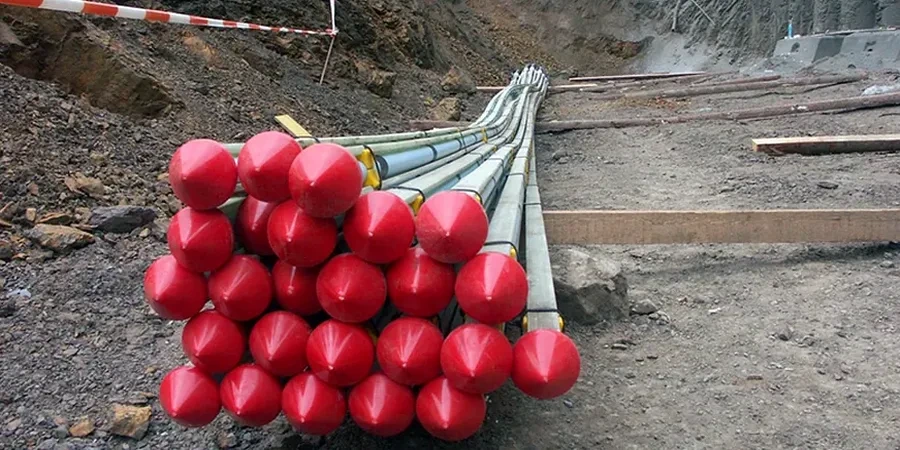
  • Post-tensioned active anchors for zero-displacement control
  • Passive bar anchors for rock slopes and temporary works
  • Corrosion protection systems rated for coastal salt air exposure
Active and Passive Anchor Design in Victoria BC
Technical reference — Victoria BC

Local geotechnical context

The coastal humidity of Victoria BC accelerates corrosion in anchor components. Salt-laden air from the Strait of Juan de Fuca attacks steel tendons over time. Double-corrosion protection is not an upgrade here—it is the baseline. Seismic risk compounds the issue. A corroded anchor fails brittlely during a quake. That is a scenario no project can afford. Our design approach includes sacrificial steel allowances and full encapsulation. We also account for seasonal groundwater changes. Winter rains on Vancouver Island raise the water table fast. Anchor bond zones in saturated gravels need re-evaluation compared to summer conditions. Skimping on this means anchors that pass a short-term test but degrade within five years.

Need a geotechnical assessment?

Reply within 24h.

Email: [email protected]

Regulatory framework

NBCC 2020 (National Building Code of Canada), CSA A23.3-19 (Design of Concrete Structures), ASTM A416 / A615 (Tendon materials), PTI DC35.1-14 (Post-Tensioning Institute — Anchors)

Typical values

ParameterTypical value
Design StandardNBCC 2020 + CSA A23.3-19
Anchor TypeActive (post-tensioned) / Passive (grouted bars)
Tendon MaterialASTM A416 Grade 270 strand or ASTM A615 Grade 75 bar
Bond Zone VerificationField pull-out tests to 1.5× design load
Corrosion ProtectionClass I or II per PTI recommendations
Seismic CategoryNBCC Seismic Category D (Victoria)
Load RangeUp to 1,000 kN per anchor typical

Questions and answers

What is the difference between active and passive anchors?

Active anchors are post-tensioned after installation. They apply a locked-in force to the structure immediately. Passive anchors only develop resistance when the ground or structure moves enough to stretch the tendon. In Victoria, active anchors are common for urban excavations where movement must be kept near zero.

How much does anchor design cost in Victoria BC?

Design fees typically range from CA$1,270 to CA$4,900 depending on the number of anchors, load testing requirements, and whether it is a temporary or permanent system. A detailed proposal follows a review of the geotechnical baseline report.

What seismic provisions apply to anchor design here?

The NBCC classifies Victoria in a high seismic zone. Anchor designs must consider both inertial forces from the structure and potential ground displacement. We apply CSA A23.3 for ductile detailing and capacity-protection principles.

How do you verify the bond zone in Victoria's soils?

We specify on-site pull-out tests to 1.5 times the design load. The test confirms the bond stress achievable in the actual ground conditions—critical in Victoria's mixed till and clay profiles where bond values can vary across a single site.

Location and service area

We serve projects in Victoria BC and surrounding areas.

View larger map