GEOTECHNICALENGINEERING
VICTORIA BC
HomeLaboratoryGrain size analysis (sieve + hydrometer)

Grain Size Analysis in Victoria BC: Sieve & Hydrometer Testing

Technical studies that support your project.

LEARN MORE

Victoria BC sits on a complex geological edge where thick marine clays meet glacial till, all under the constant influence of a cool coastal climate. The city's 230,000 residents know that rain is a constant companion here, and that moisture plays a huge role in how local soils behave. When you're planning anything from a foundation in James Bay to a road cut in Langford, understanding the full particle size distribution isn't just a box to check—it's the foundation of every drainage, frost heave, and bearing capacity calculation. We routinely combine our grain size analysis with in-situ permeability testing to give engineers a complete picture of how water moves through these layered deposits, which is critical for managing Victoria's high winter groundwater levels.

In Victoria, a hydrometer curve isn't just a lab report—it's a direct predictor of how the soil will handle our 600mm of annual rainfall.
Our service areas

Methodology and scope

The Cordilleran ice sheet left behind a legacy that makes Victoria's subsoil a mix of everything from boulder-rich lodgment till to sensitive glaciomarine silts. We see grain sizes ranging from coarse gravels near Thetis Lake to fine, uniform silts out on the Saanich Peninsula. Our lab runs the full stack: mechanical sieving for the coarse fraction and a hydrometer analysis for silts and clays, all following ASTM D422 and D6913 procedures. The resulting curve tells us far more than classification; it flags frost-susceptible silts, quantifies drainage potential, and helps predict compaction behavior. When the fines content is high, we often pair this test with Atterberg limits to nail down the plasticity characteristics and confirm whether the soil is truly expansive or just moisture-sensitive.
Grain Size Analysis in Victoria BC: Sieve & Hydrometer Testing
Technical reference — Victoria BC

Local geotechnical context

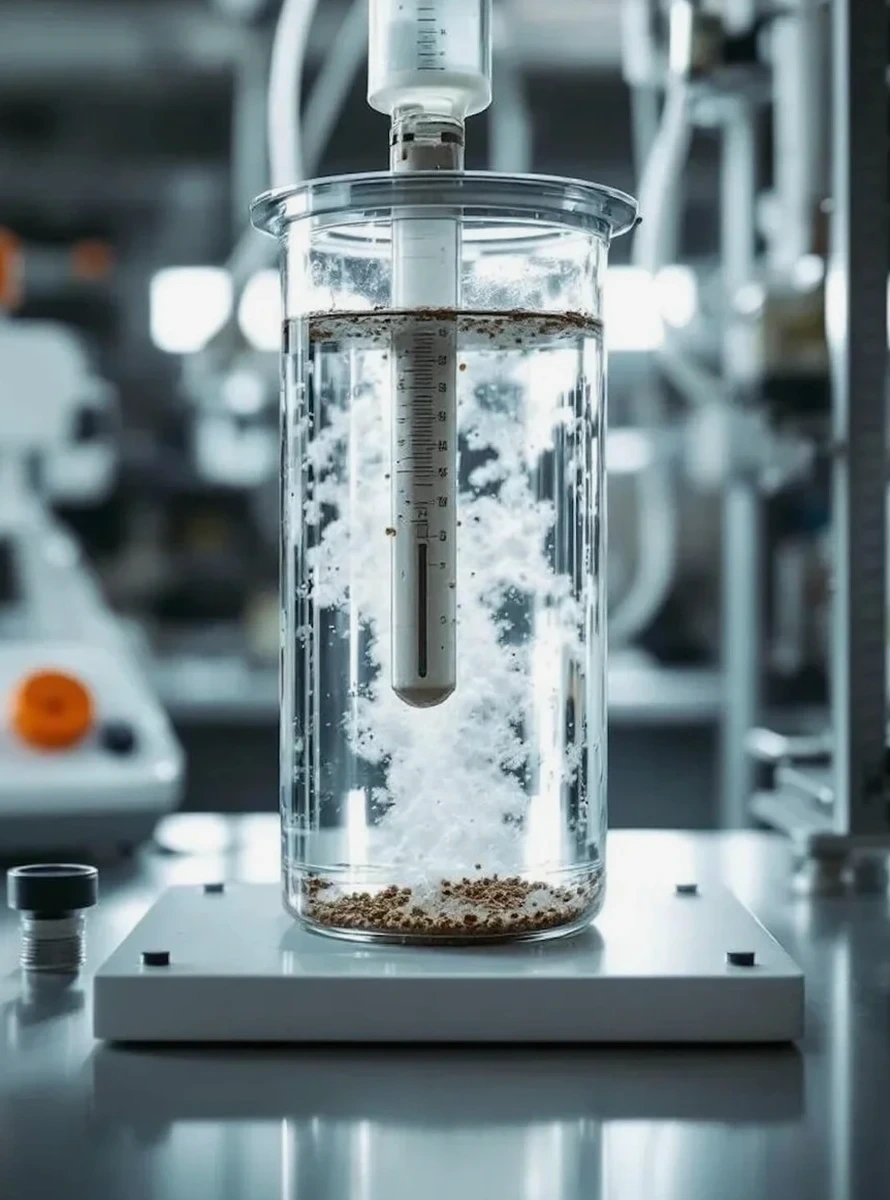
We perform the hydrometer portion using a standard ASTM 152H buoyancy hydrometer in a temperature-controlled settling cylinder, kept right here in our Victoria lab to minimize transport disturbance of the samples. The biggest pitfall in this test is rushed dispersion; if the technician doesn't break down the clay aggregates properly, the hydrometer will read a falsely coarse distribution, misleading the design team about the soil's real drainage and frost characteristics. Another common headache in Victoria is organic content in the upper soils of old swampy areas like the Colquitz River floodplain, which can skew the hydrometer readings if not pre-treated with hydrogen peroxide. Skipping that step can make a borderline silt look like a clean sand, a mistake that costs real money when it leads to under-designed sub-drainage or unexpected settlement.

Need a geotechnical assessment?

Reply within 24h.

Email: [email protected]

Regulatory framework

ASTM D422 – Standard Test Method for Particle-Size Analysis of Soils, ASTM D6913 – Standard Test Methods for Particle-Size Distribution of Soils Using Sieve Analysis, CSA A23.2-2A – Sieve Analysis of Fine and Coarse Aggregate (Canadian context), ASTM E11 – Standard Specification for Woven Wire Test Sieve Cloth

Typical values

ParameterTypical value
Sieve Range75 mm to 0.075 mm (ASTM E11)
Hydrometer Range0.075 mm to 0.001 mm (ASTM 152H)
Sample Mass (Coarse)500 g to 20 kg depending on max particle size
Dispersing AgentSodium hexametaphosphate solution
Standard ReferenceASTM D422 / D6913 / CSA A23.2-2A
Graphical OutputSemi-log particle size distribution curve
Reporting ParametersD10, D30, D60, Cu, Cc, % gravel, sand, silt, clay

Questions and answers

How much does a full grain size analysis cost in Victoria?

For a combined sieve and hydrometer test package, the typical range is CA$130 to CA$220 per sample, depending on sample volume and whether organic pre-treatment is required. Rush processing adds a small surcharge, but standard turnaround is usually five to seven business days.

What makes Victoria's glacial soils tricky for grain size testing?

The big challenge is the mix of angular glacial flour and rounded marine sands. The silt fraction here is often rock flour that stays suspended for a long time, so hydrometer readings need patience. Also, the till can contain large cobbles that require careful splitting in the field before the sample even arrives at the lab.

Do you need the hydrometer if the soil looks like just sand and gravel?

Almost always yes in Victoria. What looks like a clean granular fill often has a 5-10% silt content that you can't see by eye, but it's enough to make the material frost-susceptible or poorly draining. The hydrometer catches that fine tail and gives you the true D10 for drainage calculations.

Location and service area

We serve projects in Victoria BC and surrounding areas. More info.

View larger map