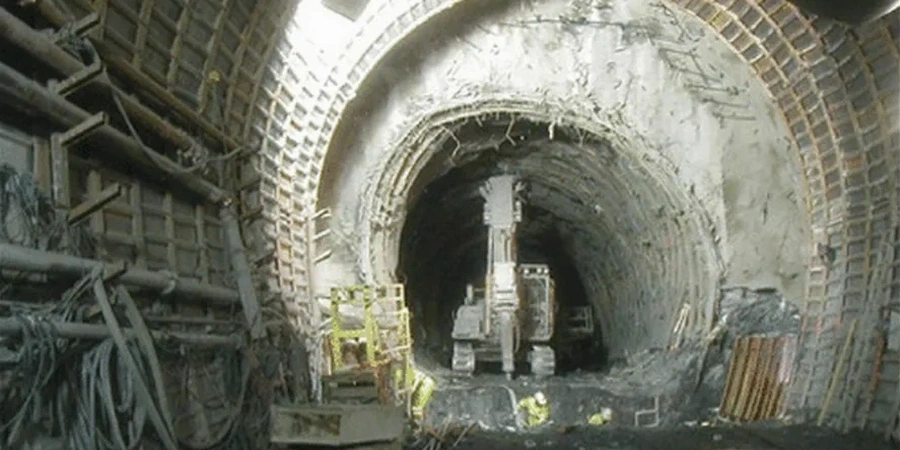
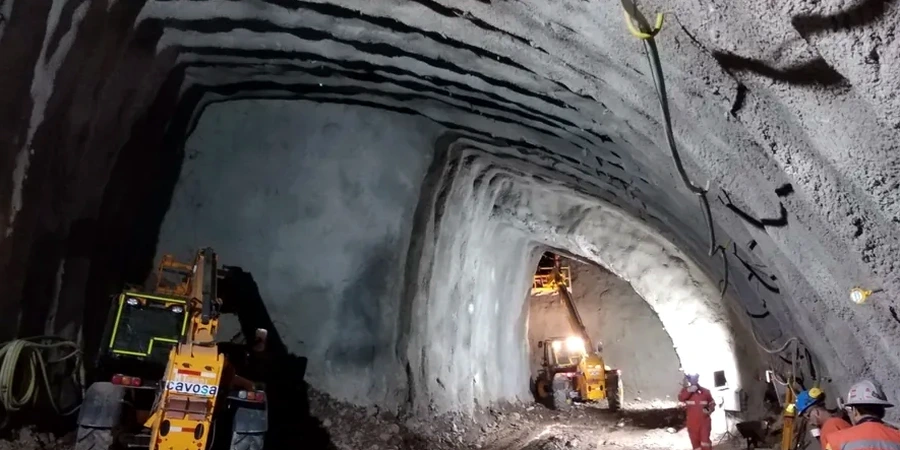
Victoria's downtown core expanded rapidly in the late 19th century atop a filled-in harbour, creating a subsurface legacy that still challenges modern tunneling. The James Bay mudflats and the thick glacial marine clays underlying much of the Inner Harbour demand a geotechnical approach rooted in local stratigraphy. Our team has analyzed samples from dozens of boreholes across Johnson Street and the Douglas corridor, where soft compressible silts and clays extend to depths exceeding 25 meters. Before any tunnel drive under these sensitive urban areas, we run a full suite of index and strength tests to characterize the ground behavior. This data feeds directly into face stability calculations and settlement predictions that protect heritage structures above. In a city recording 608 mm of annual precipitation, the pore pressure regime adds another layer of complexity that standard desktop studies simply miss. For deeper profiling we integrate CPT testing to provide continuous stratigraphic logs without sample disturbance, a critical step when defining the exact limits of the soft zone before TBM launch.
Soft ground tunneling in Victoria means designing for marine clay with undrained strengths below 40 kPa; face stability and surface settlement are not separate problems, they are the same calculation.