GEOTECHNICALENGINEERING
VICTORIA BC
HomeFoundationsRaft/mat foundation design

Raft/Mat Foundation Design for Victoria BC’s Coastal Soils

Technical studies that support your project.

LEARN MORE

Victoria’s marine climate does more than dictate your wardrobe. It shapes the ground beneath every structure. Persistent moisture from the Juan de Fuca Strait saturates the native glacial till and pockets of marine clay found across the capital region. A conventional footing often struggles here. That’s where a raft or mat foundation becomes a practical advantage. It floats the entire building footprint over soft or variable strata, reducing differential settlement that plagues spread footings in these conditions. We see this repeatedly in neighbourhoods like James Bay and Fairfield, where high water tables compound the challenge. Before committing to a slab geometry, we typically recommend a grain-size analysis to confirm fines content, or an in-situ permeability test to understand drainage behaviour under sustained load.

A mat foundation in Victoria doesn’t just sit on the ground; it bridges the soft spots that make conventional footings tilt.
Our service areas

Methodology and scope

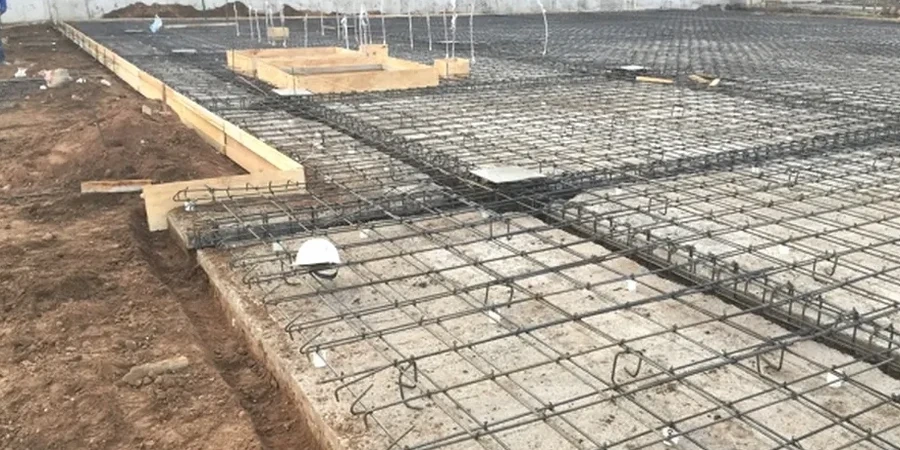
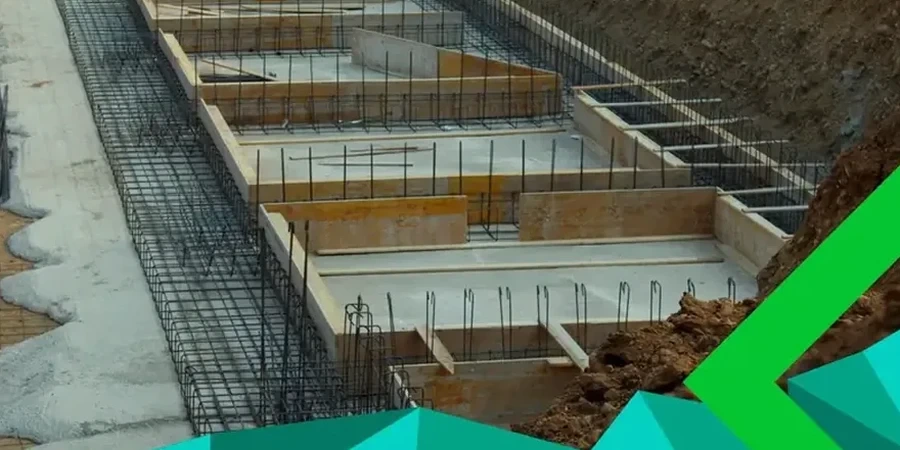
The National Building Code of Canada (NBCC 2020) and CSA A23.3 set a high bar for structural concrete, but on Vancouver Island, geotechnical input drives the design. A mat foundation here isn’t a generic slab. It’s a reinforced plate engineered to bridge soft lenses of Victoria clay while resisting the overturning moments prescribed for a seismic zone 5 city. The design process integrates bearing capacity verification, modulus of subgrade reaction profiling, and punching shear checks at column interfaces. For taller or irregular structures, we model soil-structure interaction using finite element methods, feeding in stiffness degradation curves from local consolidation data. A critical complement is the plate load test, which gives us direct in-situ deformation moduli right at the bearing elevation. That data replaces textbook assumptions with measured behaviour from the exact site.
Raft/Mat Foundation Design for Victoria BC’s Coastal Soils
Technical reference — Victoria BC

Local geotechnical context

Victoria’s downtown core and older residential belts sit on terrain that has been filled, regraded, and built over since the Hudson’s Bay Company days. We uncover buried stream channels, old shoreline deposits, and uncompacted fill more often than you’d expect. The biggest geotechnical risk with a mat foundation is assuming uniform support. A hidden pocket of organic silt or a forgotten well can create a soft spot that attracts differential movement. Edge erosion is another concern on sloping lots in Oak Bay or along the Gorge Waterway, where seasonal runoff can scour the perimeter. When we suspect liquefiable layers below the water table, we bring in liquefaction assessment protocols early. Ignoring these local anomalies leads to serviceability cracks that are expensive to repair in a marine climate where corrosion moves fast.

Need a geotechnical assessment?

Reply within 24h.

Email: [email protected]

Regulatory framework

NBCC 2020 (National Building Code of Canada), CSA A23.3:19 (Design of Concrete Structures), CSA A23.1:19/A23.2:19 (Concrete Materials and Methods), ASTM D1194 / D1195 (Plate Load Test – referenced practice), BC Building Code 2018 (provincial amendments)

Typical values

ParameterTypical value
Bearing pressure range75–150 kPa typical for glacial till
Slab thickness300–900 mm for low to mid-rise
Subgrade reaction modulus (kₛ)Derived from plate load or CPT correlation
Seismic design categoryNBCC Seismic Zone 5, Site Class C/D/E
Reinforcement grade400W or 500W to CSA G30.18
Settlement limit25 mm total, 12 mm differential per NBCC
Concrete classN- or S-class per CSA A23.1 for sulphate resistance

Questions and answers

What governs the thickness of a mat foundation in Victoria?

Thickness is driven by punching shear at columns, flexural demands from soil pressure distribution, and minimum cover for corrosion protection in a coastal environment. We typically see 400–700 mm for residential and light commercial on competent till, increasing where soft clay lenses require a stiffer plate.

Do I need a raft foundation if the site has good soil?

Not always. If the glacial till is dense and the water table is deep, isolated footings may suffice. But where the bearing stratum undulates or contains soft pockets, a mat provides redundancy. We evaluate this by comparing the cost of ground improvement against the cost of a unified mat.

What is the typical cost range for mat foundation design in Victoria?

For a standard single-family or townhouse project, the geotechnical design portion typically falls between CA$1,580 and CA$6,130, depending on the complexity of the soil profile and the number of iterations with the structural team.

How do you handle sulphate attack in marine clay?

Victoria’s marine clays can contain elevated sulphate concentrations. We specify S-class or N-class concrete with sulphate-resistant cement per CSA A23.1, based on chemical testing of soil samples taken at the mat bearing elevation.

Location and service area

We serve projects in Victoria BC and surrounding areas.

View larger map