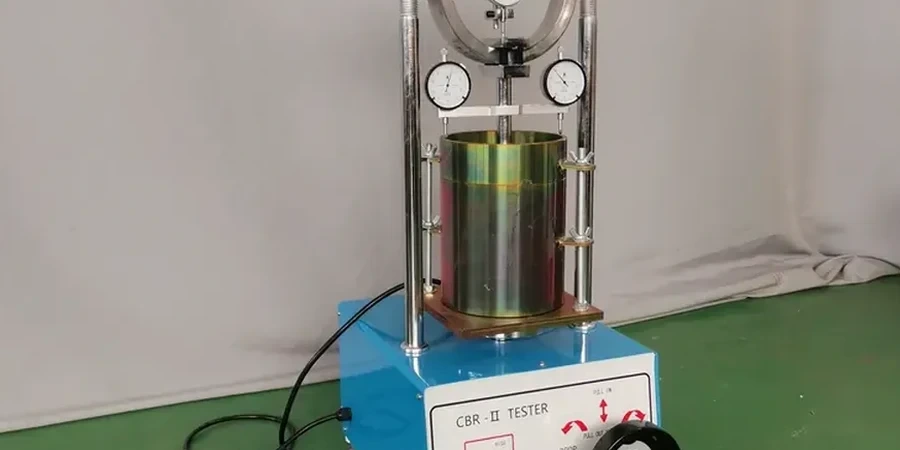
When a pavement design references the Canadian Foundation Engineering Manual and local municipal standards, the California Bearing Ratio emerges as the central parameter for subgrade evaluation. In Victoria, BC, where road bases sit over glacial till and marine clay lenses, the lab-based CBR test under ASTM D1883 provides a controlled measurement that field correlation alone cannot match. We run soaked and unsoaked specimens through a calibrated loading frame, recording penetration resistance at 0.1-inch intervals, because the difference between 3% and 6% CBR can double the required granular thickness. This level of precision matters along the Saanich Peninsula, where saturation varies seasonally with the water table perched less than one metre below surface in some neighbourhoods. For projects where in-situ variability needs confirmation, we often pair the laboratory CBR with a grain size distribution analysis to verify fines content, since silty matrices in the Victoria region tend to lose strength rapidly when moisture exceeds optimum. The output is a design-ready value that feeds directly into the AASHTO 1993 pavement design equation, adapted through BC Ministry of Transportation supplemental specifications for Vancouver Island conditions.
A single CBR value without a corresponding moisture-density curve leaves half the design story untold, especially in Victoria where seasonal saturation swings dominate subgrade behavior.