GEOTECHNICALENGINEERING
VICTORIA BC

Geotechnical Engineering in Victoria BC

Technical studies that support your project.

LEARN MORE

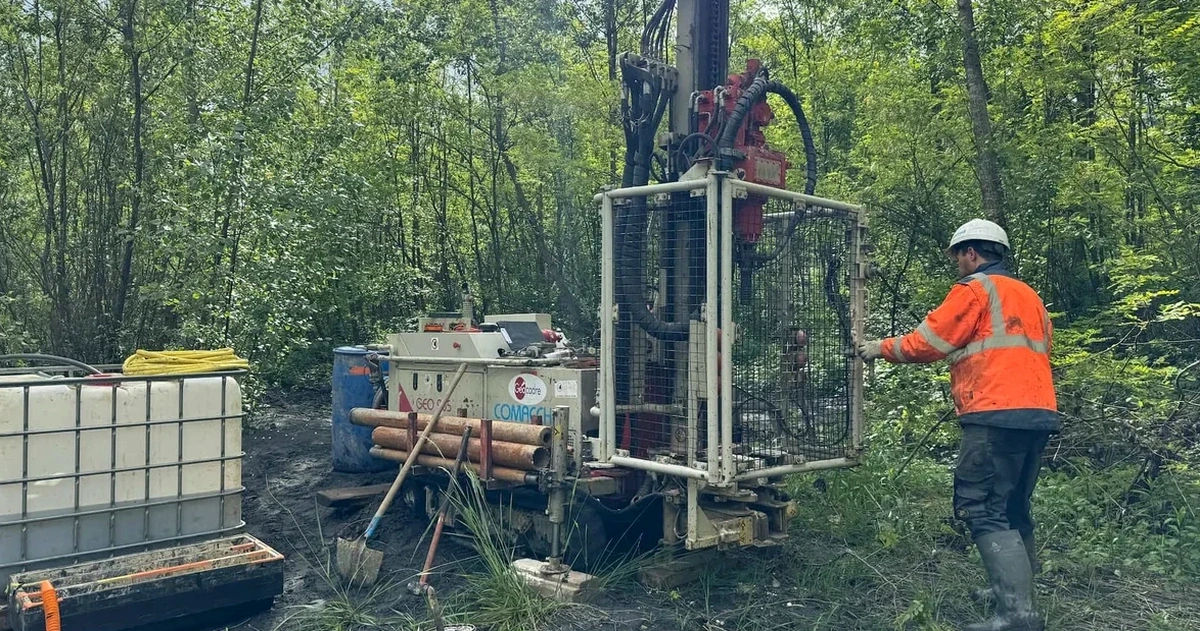
Victoria BC grew from a Hudson's Bay Company outpost in 1843 into a dense coastal capital perched on complex glacial and marine sediments, and that history still shapes every excavation today. The city's development pushed from the rocky Fairfield slopes onto the soft clays of the James Bay lowlands, where different foundation behaviors demand a rigorous soil mechanics study before any shoring or structural load is committed. Our laboratory processes borehole samples from these distinct formations to quantify consolidation potential, undrained shear strength, and seismic response under the Cascadia Subduction Zone hazard. For deeper profiles common in the Uplands area, we combine routine borehole logging with a CPT test to capture continuous tip resistance and pore pressure data without the disturbance that sampling introduces in sensitive silts.

A soil mechanics study on Victoria's glaciomarine clay must separate true cohesion from apparent suction—skip that and the factor of safety becomes guesswork.
Geotechnical Engineering in Victoria BC
Technical reference — Victoria BC

Our service areas

Local geology

The triaxial cell array in our Vancouver Island lab runs six independent frames capable of consolidated-undrained and drained stages on 50 mm specimens, which is essential when a soil mechanics study targets the Victoria clay—a glaciomarine unit that loses structure fast under remolding. We pair each triaxial program with incremental oedometer loading to plot the compression index and preconsolidation pressure, key inputs for settlement calculations on the thick drift deposits covering much of the Saanich Peninsula. While the mechanical parameters come from the lab, the stratigraphic context often requires field verification, which is why we cross-check borehole logs with a test pit excavation where access permits, letting us photograph soil fabric and collect undisturbed block samples right at the contact between the Vashon till and the underlying Quadra Sand.

Regulatory framework

NBCC 2020 (National Building Code of Canada), CSA A23.3-19 Design of Concrete Structures, ASTM D4767 Triaxial Compression, ASTM D2435 One-Dimensional Consolidation, BCBC 2018 (British Columbia Building Code)

Need a geotechnical assessment?

Reply within 24h.

Email: [email protected]

Why choose us

The contrast between the rocky knobs of Oak Bay and the alluvial trough underlying downtown Victoria BC illustrates exactly why a single presumptive bearing value is dangerous. Oak Bay sites often hit bedrock within 2 metres, giving high allowable pressures but concentrating seismic amplification at short-period structures, while the harbour-area deposits can settle differentially if a soil mechanics study does not map the lateral extent of buried peat lenses and soft estuarine clay. The worst-case scenario materializes when a developer assumes uniform conditions across a site that straddles the geological boundary between the Colwood gravels and the Victoria clay, where differential settlement cracks partition walls and underground utilities within the first five years of service.

Typical values

ParameterTypical value
Effective friction angle (Ø')28° – 38° (granular); 18° – 28° (cohesive)
Undrained shear strength (Su)15 – 120 kPa, depending on overconsolidation ratio
Compression index (Cc)0.15 – 0.55 for Victoria clay
Preconsolidation pressure (Pc)80 – 350 kPa, measured via incremental oedometer
Permeability (k)1×10⁻⁹ to 1×10⁻⁴ cm/s, field and lab correlation
Seismic shear wave velocity (Vs)120 – 500 m/s, integrated with NBCC site class
Liquefaction potential (FoS)Evaluated per Seed & Idriss framework for M9.0 scenario

Questions and answers

How long does a soil mechanics study take for a single-family lot in Victoria BC?

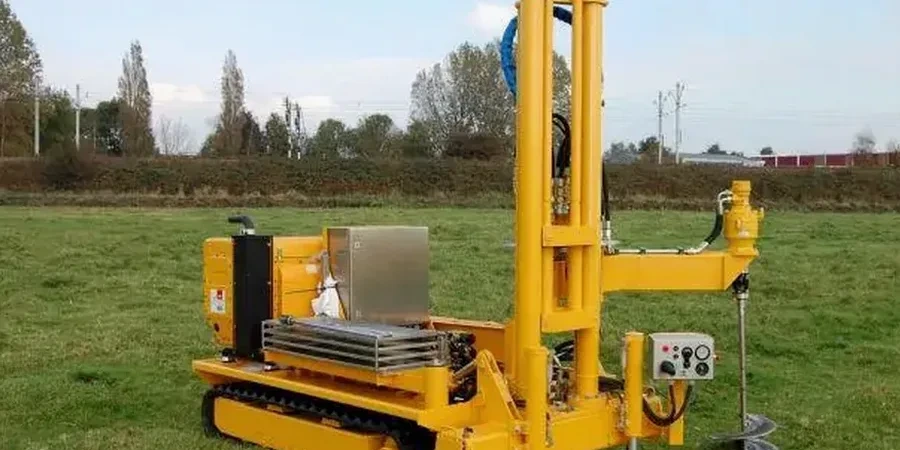
A standard program—borehole drilling, lab triaxial and consolidation testing, plus the interpretive report—typically runs four to five weeks from mobilization to the final signed document. Turnaround can compress slightly if we prioritize the oedometer stage and the site is accessible for a truck-mounted rig.

What does a soil mechanics study cost for a residential project in Victoria?

For a typical single-family lot investigation with one borehole and a focused lab suite, fees range between CA$4.600 and CA$7.270, depending on depth, access constraints, and whether seismic site class analysis is required by the municipality.

Do you handle the seismic requirements under the current BC Building Code?

Yes. We classify the site per NBCC 2020 and BCBC 2018 using shear wave velocity measurement or SPT N60 correlation, then feed the profile into a site-specific response analysis where the Cascadia M9.0 scenario governs the design spectrum.

Can you test for liquefaction potential on a waterfront property near the Inner Harbour?

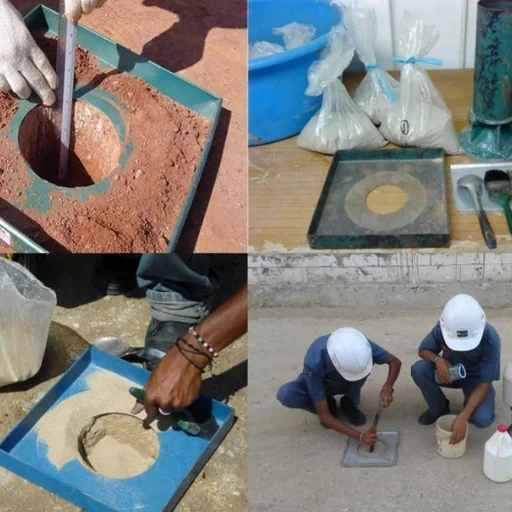
Absolutely. We run grain-size distributions to check the liquefaction susceptibility envelope and apply the Seed & Idriss simplified procedure, adjusted for the long-duration shaking expected from a subduction interface event off Vancouver Island.

What makes Victoria's soil different from other parts of BC?

The Victoria clay is a stiff, overconsolidated glaciomarine deposit that was preloaded by up to 500 metres of ice during the Fraser Glaciation, so it carries high undrained strength but can still undergo damaging consolidation if the load exceeds the preconsolidation pressure, a threshold we map carefully in every study.

Location and service area

We serve projects in Victoria BC and surrounding areas.

View larger map